Tuesday, January 17, 2012

Tuesday trainer time on a rainy winter night

It's Tuesday night, which means high intensity trainer time on my new training schedule!

I've got my index card of intervals taped to my bars, The Girl Who Kicked The Hornets Nest cued on Netflix, and a couple of waterbottles filled and at the ready.

Although I'm not excited about the cold, rainy weather here in Pittsburgh, I am glad to be back from my trip to California.  And, I'm glad to back on my CAAD 10 and I'm glad to have finally put to bed any idea about me mountain biking... even for fun. I don't like when trees pop up at me out of the mist!


Still, there is something special about wading ankledeep into the surf at sunset in the middle of January... and not being cold!

Sunday, January 15, 2012

The electrolyte mystery

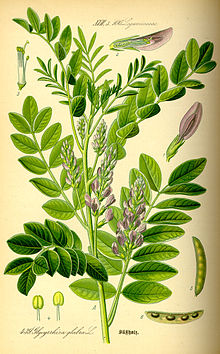
Did you know that the active ingredient (glycyrrhizinic acid) in liquorice (the real stuff, not twizzlers) can cause hypokalemia?

I didn't until recently! Apparently, licorice and anything made with anise contain a potent and long lasting aldosterone inhibitor (it's more complicated, but I'll keep it simple). Aldosterone is a corticosteroid hormone that acts on the distal tubules and collecting ducts of your nephrons. In other words, it is a hormone that out adrenal gland makes that helps us to regulate electrolytes. So, if your body senses that you need to hold onto your potassium and sodium, your kidneys usually don't let you excrete more than you should be. At the most basic level, aldosterone stops you from peeing out all of your electrolytes.

There are warnings about licorice use for people on dialysis because of the risk of hypokalemia. A simple internet search provides that much. However, nobody ever said a thing about licorice until a month ago when my new primary care provider asked whether I ate it. And, I do love licorice.

 I continue to be suprised at how something so seemingly important as electrolyte balance and nutrition were never addressed by any of the hospital staff, my GI doc, or my previous primary care physician. It has only been at my own request that I have had any type of attention to nutritional deficiencies, and my health plan has never covered a nutritional consult. One might think that these types of information would be necessary for a person without the majority of their intestines!

Here's a project that I would love to have the time to take on: A campaign for the adoption of nutritional counseling as a standard of care for those with an ileostomy, or even IBD without an ileostomy. This type of intervention has been the standard of care for diabetics and heart disease patients upon diagnosis for years. It is time that people with digestive disorders receive the same attention.

I should mention that I do see a nutritionist, specifically a sports dietician who is herself a pro iron-man (woman?) competitor. She's awesome and while there haven't been many competative cyclists with exactly my circumstances, was excited about the challenge of getting me back on track. However, those consultations have been all out of pocket expenses, and the only person who has ever asked me to get a nutritional consult is my coach.   I recognize that I am fortunate to have a smart coach who could refer me correctly, the motivation and education to be able to stick to a plan, and the financial priveledge to afford nutritional advice.

Licorice... a contributor to my problems with hypokalemia!

Wednesday, January 4, 2012

Cold feet

It's true, I'm a big baby when it comes to cycling outdoors in cold weather. If it weren't for the problem of cold feet, it wouldn't be so bad. I have an awesome pair of Endura neoprene booties, yet my toes still get cold. So cold that I don't want to put a foot down at lights, for fear of falling over due to numb/painful feet.

Sigh, if only the warmth that I generate from work on the bike would travel to my toes...

It's snowy here this week and I'm inside on the trainer. And, I'm looking forward to going to Southern California next week! Biking outdoors in 70 degree weather! No cold toes!

Sunday, January 1, 2012

Happy New Year!

Happy New Year everyone!

It's been a busy fall semester, and I admit to having cut out a lot of the peripheral things in my life. But, not bicycling! I've been riding with the university cycling club for the past few months, and putting in my time on the trainer and track. Things are looking up.

This year will be my first year competing at a collegiate level, in the C division (cat 3/4). In preparation for the cycling season, I'm getting into a more serious training schedule and finally sorting out a nutritional program to help me meet the demands of training. It looks like for the next few months until the season starts in March I will be doing two back to back endurance days, and two midweek high intensity days. I'm excited about competing and looking forward to seeing where a more structured plan will take me!

More to come...

Monday, August 15, 2011

Not again! More dehydration...

Uggg...

This past weekend I found myself [again] needing IV rehydration. I got behind and couldn't catch up. Least to say, it threw a wrench into my Sunday.

Now I'm trying to solve the mystery about what it is in specific that puts me behind in such a way that I can't recover. Sometimes, even when I've played by the rules, I still get into trouble.

Starting out dehydrated?
Having a cold or other minor viral infection?
Drinking coffee?

I'm hoping it can solve that mystery before I wind up needing any more time in an ER or urgent care!

Best quote of the weekend from an urgent care nurse (not the brightest crayon) after being told that I had just biked over 50 miles out to the airport and back, and seeing that I had been to the ER for similar dehydration and vomitting a month ago, "Your heart rate is 76, that's normal!" This said while I was laying flat (between vomitting) in a quiet room, and should have been at my resting rate.

"Not for me. That's me compensating. Check out that diastolic blood pressure number again"

My BP was 100/42. Not that the bottom number is sometimes a better reflection of hydration and actual blood volume in a person who is compensating by vasoconstriction and mild elevation in HR.

"What's your normal heart rate?"

"Low-mid 40's"

"oh..."


Hopefully in the future there will be less posting about dehydration and trips for IV rehydration, and more posting about fun stuff. That may require me to get a functional computer!


In other news, I'm planning some bike touring over the next year, with trips ranging from Lake Erie all the way up to Toronto!  I've been doing some weight training with fully loaded panniers on my Volpe and now feel comfortable (as much as one can!) on climbs in the 15% range for over a mile at a time.

Wednesday, July 13, 2011

[De]Hydration!

Well, this is the topic of the month for me and will be one of a series of posts I'm sure (assuming my computer starts functioning again).

Once I heard a gastroenterologist say that the average person with an ostomy is approximately 2% dehydrated at all times. For a person with a high output ostomy, this could be higher. Also, because people with active Crohn's, Colitis, or other intestinal disease may be malabsorptive to some degree, electrolyte balance can be more difficult to acheive. It may be impossible to follow a standard hydration regimen and expect the same results as your peers without intestinal disease.

For myself, I notice that I require a drastically higher concentration of electrolytes, and more water intake, than other people who are cycling at the same effort. I've been known to concentrate my gatorade to the point of it being gritty because no more salt and sugar will go into solution! Gross! But, the alternative is getting terrible leg cramps early on. I had this happen on approximately mile 20 of the NY Get Your Guts In Gear Ride, and have had terrible calf spasm on hot days in Pittsburgh when I have skimped on gatorade mix since then. Increase salt and potassium, and magically my cramps go away.

But, it's not that simple. Hydration is not something you can make an afterthought without getting into trouble and not being able to get out fast enough. When you notice you're dehydrated, it's often too late. How do you stay ahead of the game?

1. Prehydrate: I carry around my tall bike bottle all day and make sure I'm drinking enough. If I feel foggy, my electrolytes are probably a little out of wack. If my symptoms improve after some gatorade or Emergen-C (has more potassium than sports drinks, little sugar), then I've validated my suspicions. Some guys who race drink Pedialyte the night before a ride. This is great, but you can do it for a lot cheaper by mixing up your own balance of gatorade and Emergen-C.

2. Eat enough carbs: Carbohydrates help you stay hydrated, beleive it or not. I don't eat immediately before riding, but will eat a rice cake with some peanut butter, or some tortilla chips and mild, fine cut salsa, about two hours prior to a training ride. Both of these food items also have a little bit of a salt kick to them as well.  Your body doesn't hydrate well if you are running on too few carbohydrates. It just doesn't work out well. Plus, we all know that carbs equal quick energy, which is important for feeling up for an up pace ride!

3. Hydrate on the ride! Bring more water than  you think you need. Drink every time you stop. Get more gatorade at every chance you can. I have started carrying extra gatorade powder in my jersey pocket, so I can add it to water or mix it into gatorade that I've bought at a convenience store stop on a longer ride.

4. Don't forget to bring your 'lytes! Headlights and taillights are usefull as well, but I'm talking about quick sources of electrolytes, just in case you start getting into trouble. Bouillion cubes are small, portable, don't melt and are a great source of sodium. I went to a local natural food store and got some vegetable broth ones because I couldn't quite get past the fake chicken smell and taste of regular ones. The veggie cubes have just as much sodium in them, and taste intensely like parsley... which does nice things to your breath for a while as an added bonus!  Although they are more expensive than some boillion cubes, I've also become quite fond of the Margarita flavor of Cliff Shotblocks. This flavor in particular has 3x the sodium of others, and shuts down those calf cramps quickly the majority of the time. If I'm starting to feel slow and foggy on a ride, I eat a few and suddenly feel alive again. It's amazing what a difference it makes!

5. Know your stats: Know what effort you can expect to maintain in what conditions, and what sort of feul you need to keep yourself going. When you plan a route, especialy one off of main roads, it only takes a few minutes to google gas stations in the area. Put them on your map in marker.  Using a cyclocomputer helps me keep track of my effort and pace myself. I use a computer with a heart rate monitor built in, and I know what I can expect my heart rate to be at different speeds and percent grades. If my heart rate is higher than I know it should be, and there is no other good reason (too much coffee at work, getting over a cold, etc) then I can assume it is because I am dehydrated enough to jack up my cardiac effort. Keeping track of my heart rate does more than help me pace myself, it also helps me set my rate for hydration and rehydration.

6. Be willing to readjust your plan: Be aware of your hydration status, and how much longer you can go on. If you are really truly getting into trouble, maybe it's time to consider how much longer you MUST keep on going. If I'm cycling in town and am a mere 12 or 15 miles from home, that is a very different situation than finding myself getting dehydrated or with electrolyte abnormalities out accross the West Virginia or Ohio state border. If you are close to home and can plan on getting back to your end point before hydration, go for it if you can do it safely. But, with 50 or 60 miles to go, it may be time to start planning a longer stop of an hour or two. Depending on how far out of wack you are, you may need longer, or a real exit plan. But, that's the worst case scenario. Probably a few bottles of gatorade in the shade of a convenience store and a snack will get me back on the road to home. If others on the ride will absolutely not wait, that's ok. It's better to ride home alone and make it home, then have a major emergency while trying.

7. Rehydrate! Agressively rehydrate sooner than later. Drink more than you think you need to, eat some salty snacks (especially if you are craving them. That means your body is telling you that you need it!), and cool down. V8 is suprisingly effective in replacing electrolytes and micronutrients. Get some good carbs in after a ride too, it will help you recover for next time. With so much attention to protien in popular media, it's easy to forget the carbs after a workout.


Even with all of that planning and thought about hydration, I am still trying to figure it out. I like to ride hard, and this past weekend rode myself right into the ER (well, figuratively, not litterally...) by getting seriously dehydrated and running a low potassium because I was not replacing it as well as sodium.  I've also started seeing a sports nutritionist for some guidance on making these subtle tweeks to my daily diet and hydration during cycling.  More on that to come!

Oh, and, want to see who joined me on a ride yesterday evening?

Check out these guys!


Friday, July 1, 2011

I'm not dead... yet...

No, I didn't die or fall off the face of the earth completely.  But, my laptop did! So, I'm now at work, on lunch... and thought I'd put up a quick post while I can.

Hopefully I will be able to remedy this computer situation soon! I will be resolving it before the Fall term starts, at latest, If not before then.

The New York Get Your Guts In Gear Ride was awesome! I will post a real peice about that (and leg cramps...) soon - perhaps this weekend if I have any free time on my Sunday shift as a Paramedic (if the dear people in my district can take a break from blowing themselves up with fireworks this weekend).

Other reasons for my lack of posting, and drastically reduced riding time, include strep throat that just won't quit! I've now been on three rounds of antibiotics and am onto the really serious stuff (Avelox). I'm still generally feeling cruddy but have been getting in some riding here and there. I think that is the real difference between people who have a chronic illness and those who don't: a better understanding of what it means to work through pain/illness. Last weekend I did a pretty gnarly hill ride with strep and a phenomenal barking cough. Although I am going to duck out of the time trial I was supposed to do today, I am currently still planning on doing a ~100 mile ride out to Ohio, West Virginia, and back to Pittsburgh tomorrow. I figure that even if I feel completely cruddy today, as I sit here in my office feeling like I just want to curl up on the floor, I COULD be on a bicycle feeling just as cruddy. Maybe I'll feel like hell. But, I'm pretty sure I am capable of riding for 5 or 6 hours in this condition. And, if not, I'll take a break and get back to the burgh a little bit later than expected.

This holiday weekend I may also be upgrading my crankset to a Shimano Ultegra, if I can get it to work with my current setup. From what I've heard from others about this upgrade, it could add another 1-2 mph to my speed, with the same amount of effort.